

Internet Gaming License Requirements Explained for Beginners
If you are planning to launch an online casino or sportsbook, securing an internet gaming license is one of the first and most important steps. Without it, your business cannot operate legally or build lasting trust with players, regulators, and business partners.
The challenge is that many beginners enter the process thinking it is just paperwork, only to discover that strict rules, detailed documentation, and regulatory review can quickly become overwhelming.
A small mistake at the start can lead to delays, added costs, and lost momentum when you are trying to enter the market. That is what makes the process frustrating for new operators and suppliers.
The good news is that it becomes much easier when you understand what regulators expect and take a structured approach from the beginning. With the right guidance, you can move forward with more confidence, avoid costly setbacks, and build a stronger path toward approval.
Internet Gaming License Requirements You Need to Know

Before anything else, regulators want to see that your business is legitimate, transparent, and ready to operate responsibly. This is where many first-time applicants run into problems. They may have a strong brand or platform, but the application itself does not fully show the strength of the business behind it.
What regulators usually review
Regulators commonly assess:
- business registration and legal structure
- ownership and shareholder transparency
- source of funds and financial stability
- internal controls and operating model
- compliance readiness and risk management
Imagine a startup with a good platform and enough funding, but with incomplete shareholder details in its application. Even if the business looks promising, unclear ownership can immediately slow down the review. The solution is simple but important: prepare every part of the application with full transparency from the beginning. This is why internet gaming operator registration is not just an administrative step. It is a key part of showing that an operator is serious, credible, and prepared for a regulated market.
Why Documentation Matters So Much
Another common problem is incomplete or inconsistent paperwork. This often leads to follow-up requests, long delays, and unnecessary back-and-forth with regulators.
Important documents often include:
- company registration certificates
- identification documents for directors and stakeholders
- proof of funds and financial records
- business plans and operating structure
- policy documents related to compliance and controls
This is one of the main reasons businesses seek help with regulatory documentation and compliance. Well-prepared documentation gives regulators more confidence and helps the process move more smoothly.
Why Licensing Matters for Long-Term Growth
Licensing is not only about legal approval. It also affects your credibility, partnerships, and long-term expansion potential. Businesses that treat licensing seriously often build stronger foundations for sustainable growth.
A properly licensed business is in a better position to:
- earn player trust faster
- attract investors and strategic partners
- enter regulated markets with less risk
- strengthen long-term brand value
Without proper approval, even a strong business can run into serious issues. Some companies rush into launch, only to discover that missing compliance steps create bigger problems later. It is always easier and more cost-effective to prepare properly before launch than to fix regulatory issues afterward.
Operators and suppliers both need the right path. Licensing is not only relevant to operators. Businesses that provide platforms, software, payment tools, or related services may also need their own approval path. That is where gaming-related supplier registration becomes important.
If your business supports the gaming industry instead of directly running the gaming platform, you still need to make sure you are entering the market through the correct regulatory route.
How the Process Usually Works
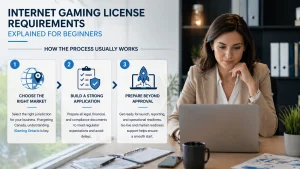
The process is much easier to understand when broken into stages. Many people ask how to get a gaming license, but the real answer depends on preparation, strategy, and choosing the right jurisdiction.
Step 1: Choose the right market
Your first decision should be where you want to operate. This choice affects your timeline, compliance obligations, and application strategy. If Canada is part of your growth plan, understanding iGaming Ontario is especially important because it is one of the most structured and attractive regulated gaming markets in the region.
Step 2: Build a strong application
Once the target market is clear, the next step is building a complete and credible application. This includes legal, financial, and compliance materials that clearly show your readiness. When businesses apply for gaming license approval without enough preparation, delays become much more likely. Regulators may request clarification, more documents, or additional proof that the company is ready to operate responsibly.
Step 3: Prepare beyond approval
Approval is a major milestone, but it is not the end of the process. Businesses still need to prepare for actual launch, reporting, and operational readiness. This is where go-live and market readiness support becomes valuable. A company may receive approval, but if its systems, workflows, and reporting processes are not aligned, launch can still become difficult. Proper readiness support helps bridge that gap.
Common Mistakes Beginners Should Avoid
Many beginner mistakes come from underestimating the depth of the licensing process. The problem is usually not lack of ambition. It is a lack of clarity on what regulators truly expect.
Common issues include:
- incomplete ownership or shareholder details
- weak compliance preparation
- inconsistent financial documentation
- choosing the wrong registration path
- rushing submission before the business is fully ready
If you are targeting Canada, these issues matter even more because gaming license requirements are taken seriously and compliance expectations continue after approval.
A stronger approach is to:
- define whether your business is an operator or supplier early
- organize your documents before submission
- prepare internal controls and compliance systems in advance
- work with experienced regulatory professionals who understand the market
This creates a clearer path and reduces the risk of avoidable setbacks.
Why Businesses Work With Top Alliance Corp
At Top Alliance Corp, we help gaming operators and suppliers enter Canada’s regulated market with clarity, confidence, and a structured path to approval. Our role is to make the process easier to understand and easier to manage.
We support businesses through services such as:
- Internet Gaming Operator Registration
- Gaming-Related Supplier Registration
- Regulatory Documentation & Compliance
- Go-Live & Market Readiness Support
What makes a difference is not only knowing the rules, but knowing how to prepare your business in a way that meets those rules efficiently. That is where practical experience matters. A soft but important truth is this: many businesses could save time, money, and stress if they had the right regulatory support earlier in the process.
Ready to Enter Canada’s Regulated Market?

Securing an internet gaming license is more than just checking a legal box. It is the foundation of a credible, compliant, and scalable gaming business. When you prepare properly, choose the right path, and avoid common mistakes, you create a much stronger position for launch and long-term growth.
At Top Alliance Corp, we are proud to be a trusted regulatory partner for Canadian iGaming growth. We help operators and suppliers move forward with a clear strategy, stronger documentation, and practical support from application to launch.
If you are serious about entering the market with confidence, now is the time to take the next step. Contact Top Alliance Corp today and let us help you build a structured, approval-ready path into Canada’s regulated gaming industry.
1 Comment
Getting a Gaming License in Canada: 5 Mistakes to Avoid
August 28, 2026[…] Review licensing requirements before preparing your application. […]