


B2B Gaming Supplier License Explained for Ontario Suppliers
You may have a strong iGaming product, reliable technology, and the iGaming operators are interested in your product. But entering Ontario can become more complicated once regulatory questions start coming up.
- Do you need a licence?
- Does your company need to register?
- Does your technology also need testing?
- Can an Ontario operator work with you before everything is ready?
These are important questions for B2B gaming companies because Ontario does not treat supplier regulation as a simple box to check before launch.
A B2B gaming supplier license is a common way businesses describe the authorization needed to supply iGaming products or technology in a regulated market. In Ontario, the regulatory language and structure are more specific.
At Top Alliance Corp, we help iGaming businesses understand how their role, technology, and commercial plans fit within Canada’s regulated iGaming environment. Knowing how the system works before you start operator discussions can make your Ontario expansion much easier to plan.
What Does B2B Gaming Supplier License Mean in Ontario?

The term B2B gaming supplier license generally refers to regulatory approval for businesses that provide gaming-related products, systems, technology, or services to other gaming companies rather than directly to players.
Ontario commonly uses the term gaming-related supplier registration within its regulatory framework.
This distinction matters.
A supplier expanding from Europe, Asia, or another regulated market may be familiar with terms such as B2B licence, supplier licence, or gaming vendor licence. Ontario may classify and regulate those activities differently.
Instead of assuming that the terminology used in another jurisdiction applies in Canada, suppliers should look closely at:
- What their company provides
- How the product interacts with gaming operations
- Which businesses will use the product
- Whether the technology is part of a gaming system
- Which Ontario regulatory requirements may apply
If your main question is whether your company falls within Ontario’s supplier registration framework, we recommend reading our guide on who needs Gaming-Related Supplier Registration in Ontario.
This article focuses specifically on eligibility and supplier classification, while this guide looks at the bigger B2B picture.
B2B vs B2C iGaming Licensing in Ontario
One of the simplest ways to understand the B2B side of the iGaming industry is to compare suppliers with B2C operators.
A B2B gaming supplier provides products, technology, or services to other gaming businesses rather than directly to players. These may include:
- Gaming software
- Platform technology
- Game content
- Gaming systems
- Technical solutions
- Other regulated gaming-related services
For example, a company such as Playtech can operate as a B2B technology provider by supplying gaming software and platform solutions to operators.
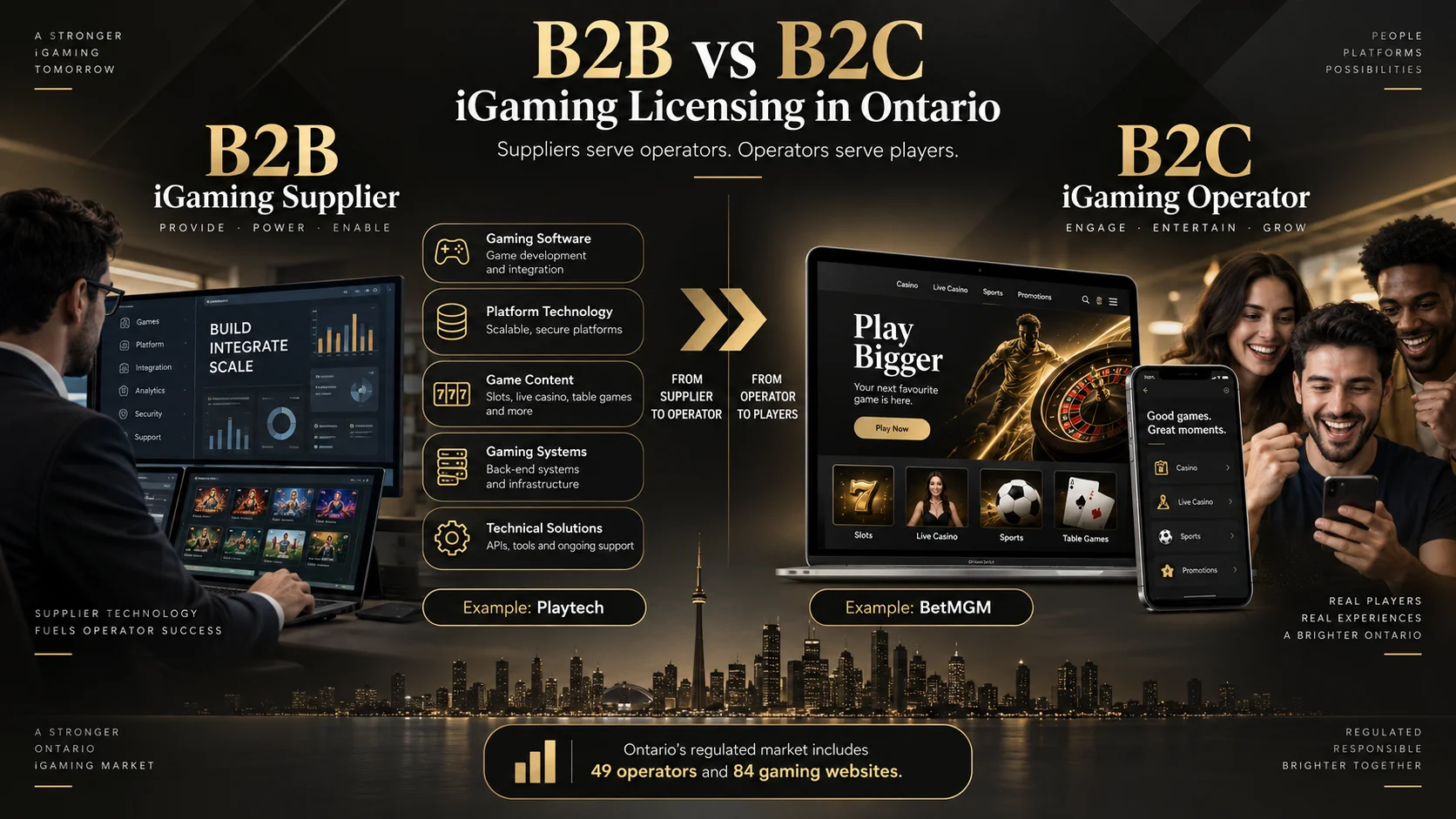
A B2C operator, on the other hand, provides the gaming experience directly to consumers. A brand such as BetMGM is a clear example because players interact directly with the brand to access online casino, sportsbook, and other gaming products.
This distinction is important because B2B suppliers and B2C operators have different roles within Ontario’s regulated iGaming market. For suppliers, the key question is not only whether they can do business in Ontario. They also need to understand how their technology, games, or services will fit into the systems and operations of regulated operators.
As of September 1, 2026, iGaming Ontario lists 49 regulated operators and 84 gaming websites in the province.
For B2B suppliers, this makes Ontario more than a regulatory opportunity. It is also a strong commercial market where being properly registered, compliant, and technically ready can directly influence opportunities to work with established iGaming operators.
Supplier Registration and Technology Certification Are Not the Same
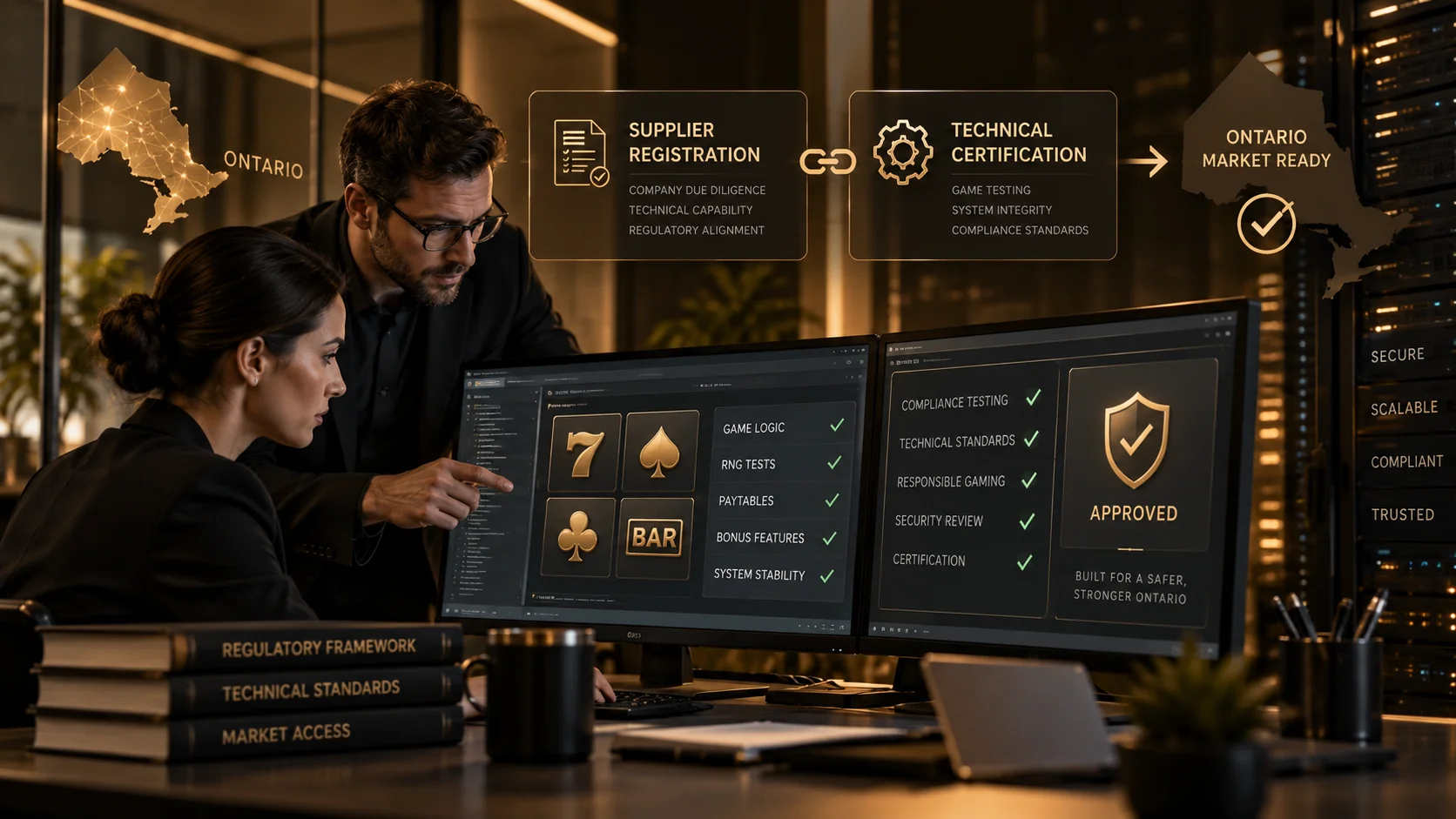
This is one of the most important distinctions for companies researching a B2B gaming supplier license.
Registering the business and preparing the technology are related, but they are not always the same process.
Some suppliers may need AGCO registration, while certain games and supporting critical gaming systems must also be certified by an AGCO-registered independent testing laboratory before they can be made available for play in Ontario.
Think of the process as two separate questions:
Is the company ready to participate in Ontario’s regulated market?
and
Is the applicable gaming technology ready to be used in that market?
A business can create unnecessary delays if it focuses only on corporate registration while leaving technical requirements until late in the project.
This is why B2B suppliers should bring regulatory, technical, and commercial teams into the conversation early.
Why Regulatory Readiness Matters to Ontario Operators
A strong product is important, but an operator also needs confidence that a supplier can support a regulated launch.
iGaming Ontario specifically encourages operators to work proactively with suppliers so both sides are ready at the same time.
For a supplier, this means regulatory readiness can become part of the commercial relationship.
Before committing to an Ontario integration or product launch, your team should be ready to answer questions such as:
- What is our regulatory status in Ontario?
- Does our technology require certification?
- Have relevant technical requirements been reviewed?
- Can we support an operator’s launch timeline?
- Are regulatory and commercial teams working toward the same schedule?
These questions matter because one delayed workstream can affect several others.
A certification issue may delay product deployment. Missing regulatory preparation may affect onboarding. An unrealistic launch date may put pressure on both the supplier and operator.
For Canadian market planning, it is usually better to identify these dependencies before contracts, integrations, and launch dates become difficult to change.
Where Gaming-Related Supplier Registration Fits Into Your Ontario Strategy
Gaming-Related Supplier registration should be viewed as one part of a wider Ontario strategy.
Your business may also need to consider technology readiness, testing, operator integration, compliance responsibilities, and commercial timing.
If you already know your company may require supplier registration and want to understand the actual process, read our guide on how to apply for Gaming-Related Supplier Registration.
That guide covers the application side in more detail, so you do not need to treat every Ontario regulatory question as one large process.
At Top Alliance Corp, we support gaming businesses with Gaming-Related Supplier Registration, regulatory documentation, compliance preparation, and market-readiness planning.
Our goal is to help businesses understand what needs attention before regulatory issues begin affecting operator discussions or launch plans.
Frequently Asked Questions About B2B Gaming Supplier License in Ontario
Is a B2B gaming supplier license the same as Gaming-Related Supplier Registration?
Not exactly. B2B gaming supplier license is a broader industry term. Ontario uses specific regulatory terminology, including Gaming-Related Supplier registration, depending on the activities of the business.
Does supplier registration automatically approve gaming technology?
No. Company registration and technical certification should be considered separately. Certain games and critical gaming systems must meet Ontario’s applicable testing and certification requirements.
Why should B2B suppliers prepare before approaching Ontario operators?
Operators and suppliers often depend on each other’s readiness. Starting regulatory and technical planning early can help reduce problems with integration, certification, onboarding, and launch schedules.
Prepare Your B2B Gaming Business for Ontario

Entering Ontario with a strong gaming product is only part of the opportunity. You also need to understand how regulation, technology, and operator partnerships work together.
At Top Alliance Corp, we help gaming suppliers turn complex Canadian regulatory requirements into practical next steps. Whether you are evaluating your supplier status, preparing regulatory documentation, or getting ready to work with Ontario operators, our team can help you build a clearer path forward.
Planning to bring your gaming technology or services to Ontario? Contact Top Alliance Corp and start preparing your B2B gaming strategy with greater regulatory clarity.