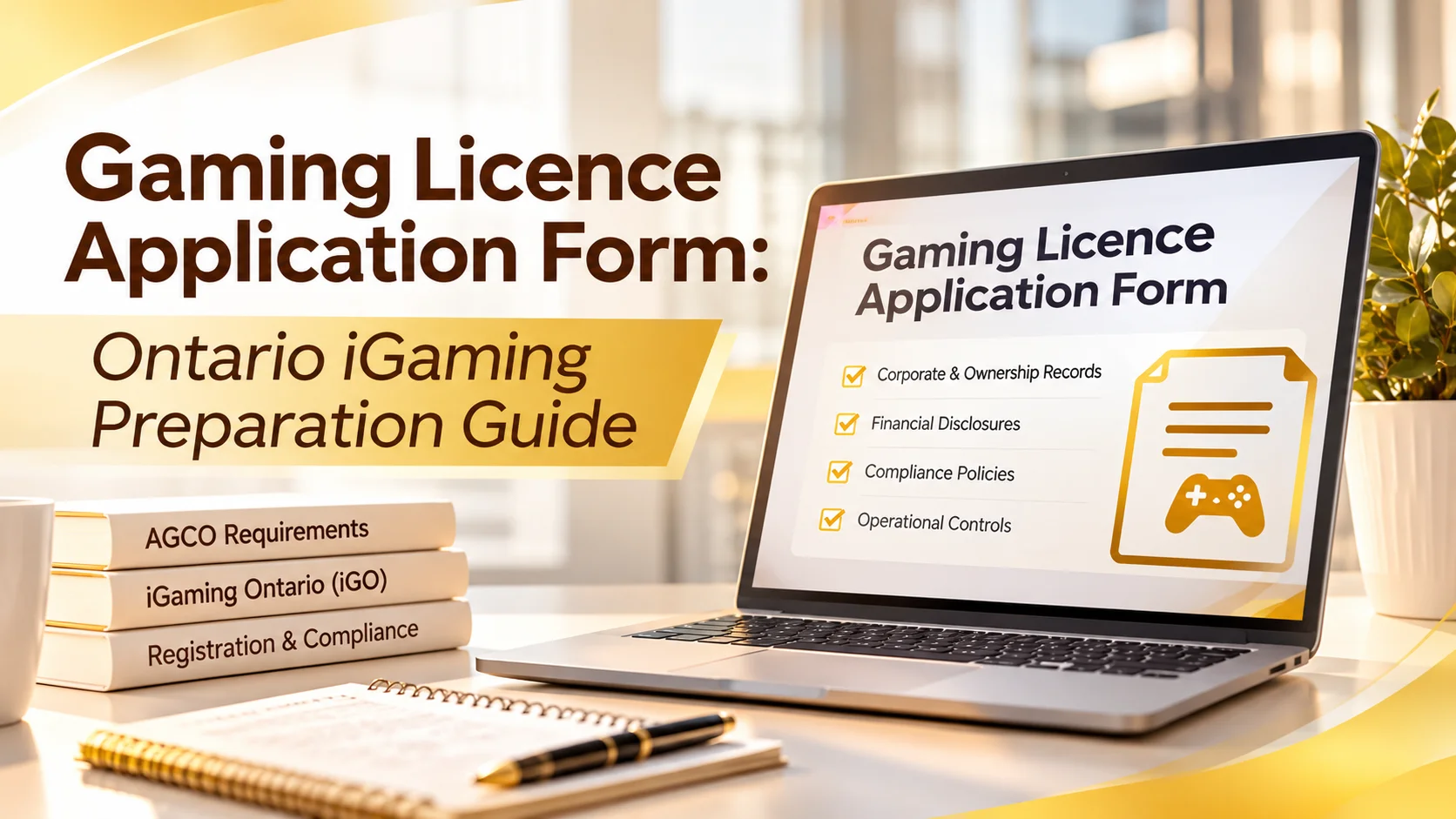
Gaming License Application Form: Ontario iGaming Preparation Guide
Planning to enter Ontario’s regulated iGaming market? Whether you’re launching an online casino, sportsbook, or gaming-related service, understanding the registration process is an important first step.
Preparing your gaming license application form involves more than providing company details. Depending on your registration category, regulators may require information about your ownership structure, finances, compliance procedures, and business operations.
At Top Alliance Corp, we help iGaming operators and suppliers understand these requirements and organize their documentation before submission.
In this guide, we’ll explain where to apply, what to prepare, and how to identify potential gaps before moving forward.
Where to Start Your Gaming License Application Form in Ontario
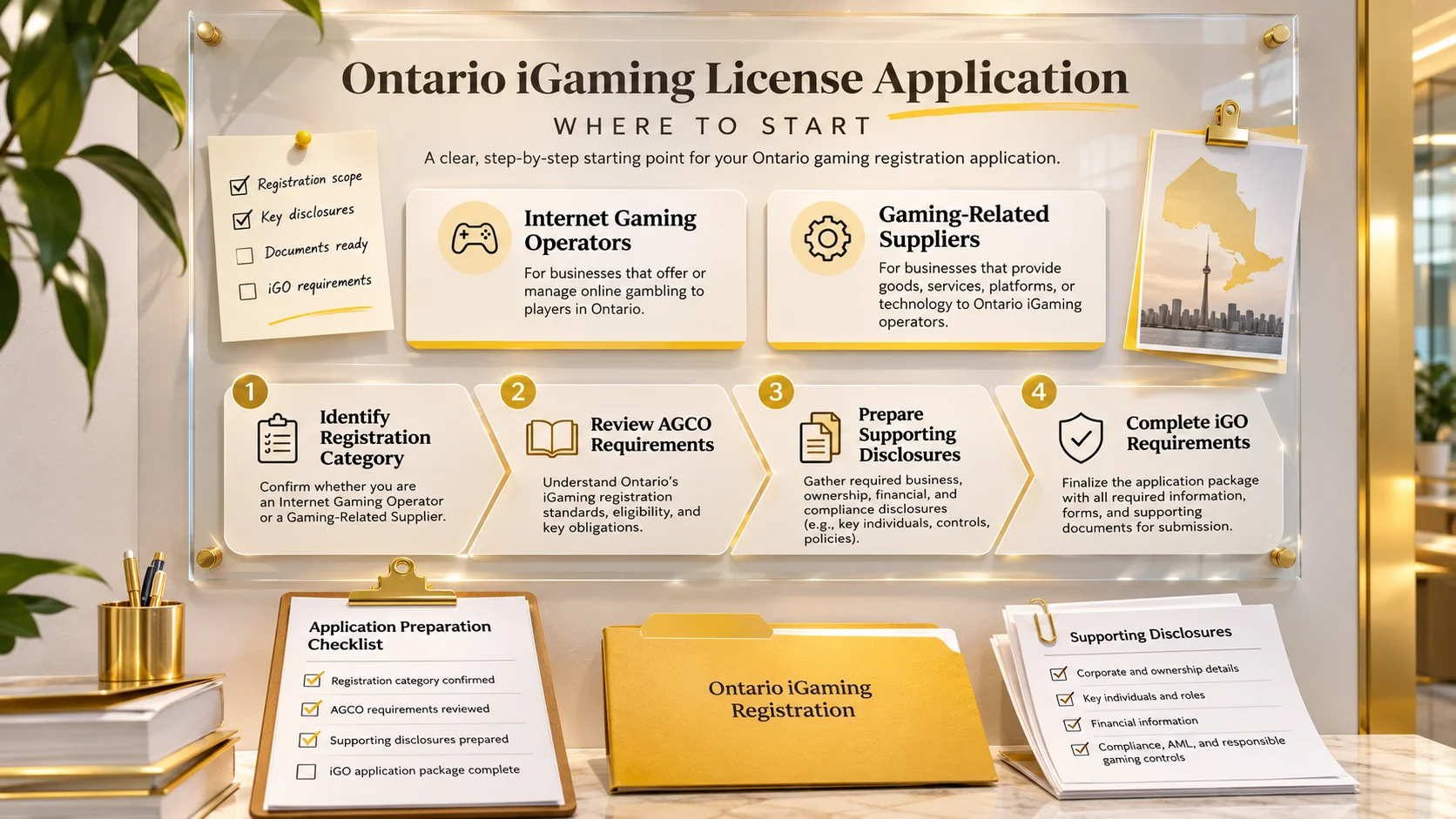
Businesses seeking a gaming license in Ontario must first identify the registration category that applies to their operations.
The Alcohol and Gaming Commission of Ontario (AGCO) manages registration through its online portal, iAGCO.
Two common applicant categories in the regulated iGaming market include:
- Internet Gaming Operators: Businesses intending to offer regulated online casino games or sports betting.
- Gaming-Related Suppliers: Businesses providing gaming technology, equipment, or other regulated gaming-related services.
Application requirements differ depending on your registration category. Before starting an application in iAGCO, review the relevant AGCO guide and identify which corporate entities and individuals may need to provide supporting disclosures.
Operators must also complete applicable requirements with iGaming Ontario (iGO) before entering the market.
What Documents Should You Prepare for Your Application?
Preparing for an Ontario iGaming license requires accurate documentation. Although requirements depend on your registration category, the following areas deserve attention.
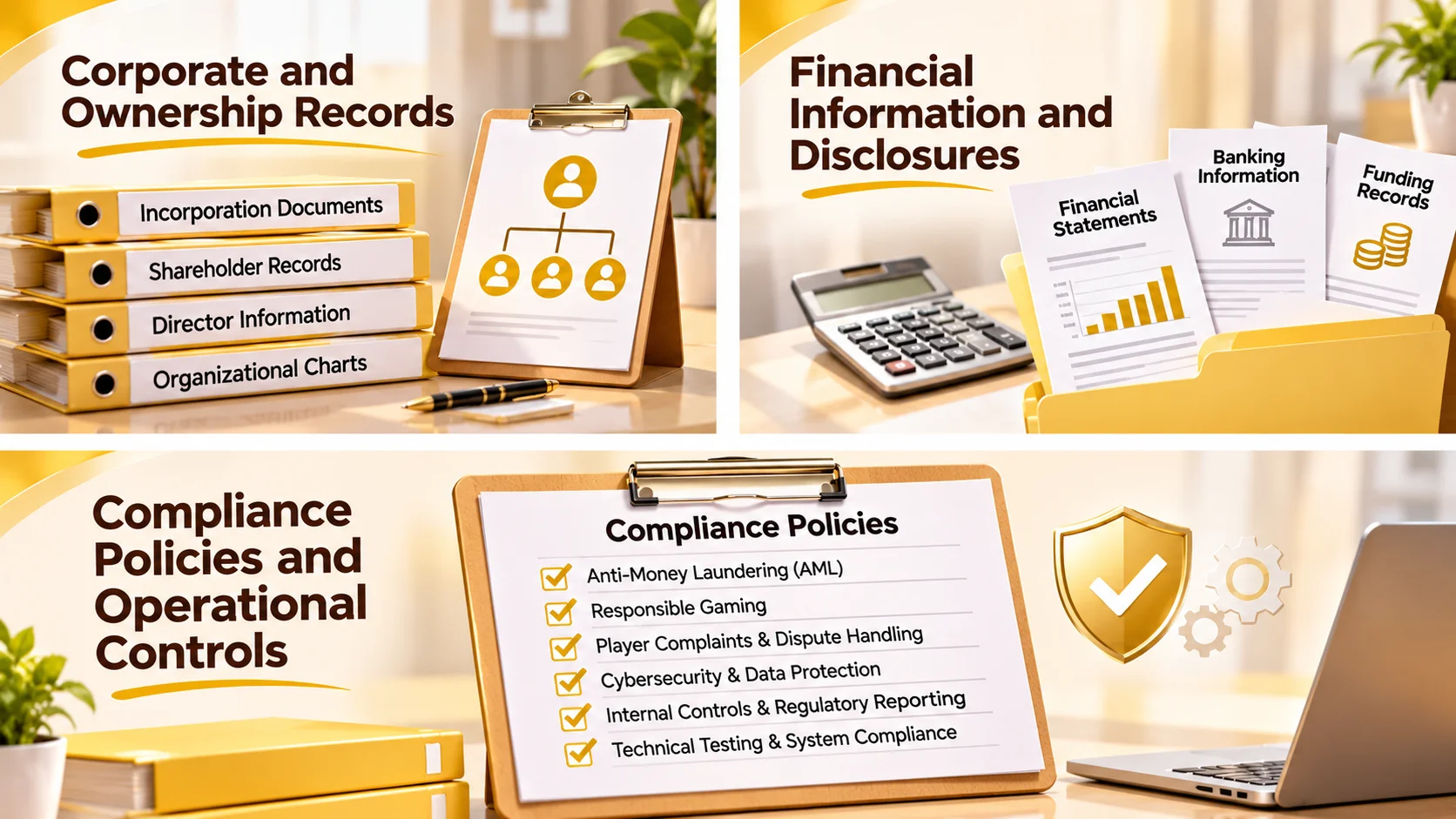
Corporate and Ownership Records
Regulators need to understand who owns, manages, and controls your business.
Prepare incorporation documents, shareholder records, director information, and organizational charts.
For example, if your company operates through multiple holding companies, your records should explain the ownership relationships and identify who ultimately exercises control.
Financial Information and Disclosures
Depending on your application, regulators may request financial statements, banking information, funding records, and supporting disclosures.
Compare company names, ownership details, and funding arrangements across your financial and corporate records.
If funding comes from a related company, make sure the relationship and supporting transactions are properly documented.
Compliance Policies and Operational Controls
Your compliance documents should explain how your business manages regulatory responsibilities.
Depending on your activities, relevant areas may include:
- Anti-Money Laundering (AML) procedures
- Responsible gaming measures
- Player complaints and dispute handling
- Cybersecurity and data protection
- Internal controls and regulatory reporting
- Technical testing and system compliance
Rather than relying on generic templates, review whether your policies reflect your actual operations.
Consider maintaining a document checklist that records what has been collected, who is responsible for each item, and whether the information has been reviewed. This helps your team track outstanding requirements and avoid outdated records.
Understanding AGCO and iGaming Ontario Requirements
Businesses researching an Ontario gaming license often encounter two organizations with different responsibilities.
The AGCO oversees regulatory registration, eligibility assessments, and compliance with applicable gaming standards.
Meanwhile, iGaming Ontario (iGO) manages the commercial framework through which private internet gaming operators participate in the regulated market.
For operators, the process includes AGCO registration and applicable iGO market-entry steps, such as executing a Non-Disclosure Agreement (NDA), completing a Letter of Agreement, and preparing for operational requirements.
AGCO registration is an important milestone, but operators must also complete applicable iGO market-entry requirements, including executing an operating agreement, before entering the regulated market.
Gaming-related suppliers may require AGCO registration but do not automatically follow the same operating-agreement process.
For more information, review the official steps to join Ontario’s iGaming market.
What Costs Should You Consider Before Applying?
Registration fees are only part of the overall cost of entering Ontario’s regulated iGaming market.
Depending on your business model, your budget may need to cover:
- Regulatory costs: Applicable registration fees and related regulatory expenses.
- Technical costs: System testing, certification, integrations, and platform adjustments.
- Operational costs: Compliance staffing, internal controls, training, and ongoing reporting.
Before finalizing your budget, check the current AGCO fee schedule and confirm which expenses apply to your registration category.
Operators and suppliers may have different requirements, so relying on another company’s estimated costs could lead to inaccurate planning.
6 Steps to Review Your Application Before Submission
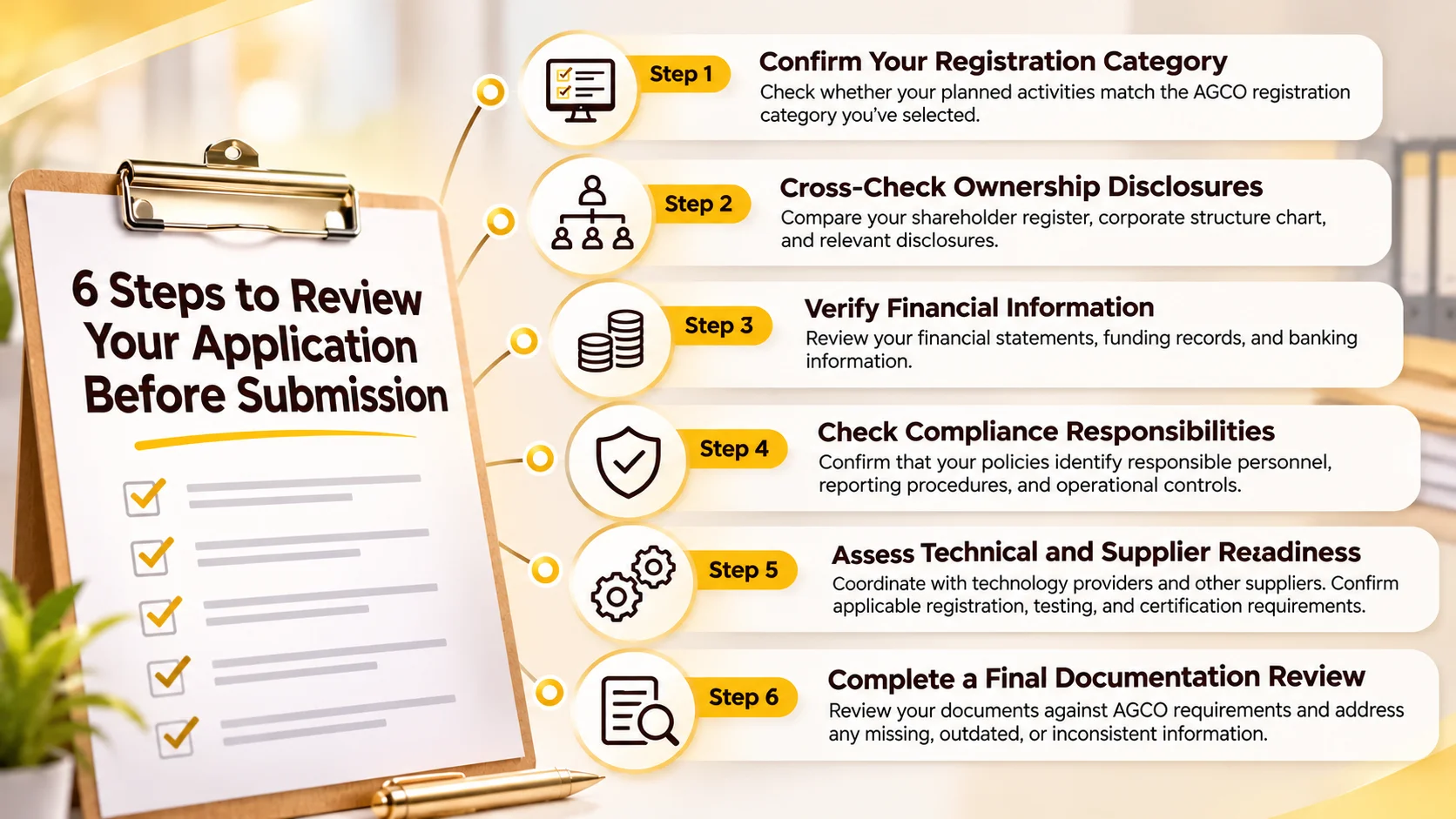
Once your documents are organized, review them together to identify gaps and inconsistencies.
Step 1: Confirm Your Registration Category
Check whether your planned activities match the AGCO registration category you’ve selected. Review the corresponding application requirements.
Step 2: Cross-Check Ownership Disclosures
Compare your shareholder register, corporate structure chart, and relevant disclosures. Confirm that ownership relationships and individuals exercising control are consistently identified.
Step 3: Verify Financial Information
Review your financial statements, funding records, and banking information. Identify missing supporting documents or transactions requiring clarification.
Step 4: Check Compliance Responsibilities
Confirm that your policies identify responsible personnel, reporting procedures, and relevant operational controls.
Step 5: Assess Technical and Supplier Readiness
Coordinate with technology providers and other suppliers. Confirm applicable registration, testing, and certification requirements before planning your launch.
Step 6: Complete a Final Documentation Review
Before submission, review your documents against the applicable AGCO requirements. Record missing attachments, outdated information, or inconsistent disclosures, then assign each issue to a responsible team member for resolution.
Common Documentation Gaps to Avoid
Even businesses with established operations can overlook details during preparation.
For example, an ownership chart may identify a parent company without explaining who ultimately controls it.
An operator may also have a responsible gaming policy outlining player protection measures, but its internal procedures may not clearly identify who monitors these controls or handles related concerns.
These examples show why businesses should review both their written policies and the procedures used to carry them out.
We recommend checking whether your corporate records, compliance policies, and actual operations present a consistent picture of your business.
How Top Alliance Corp Supports Your Registration Preparation
Managing registration requirements can become complicated when several teams are responsible for preparing different documents.
At Top Alliance Corp, we help iGaming operators and gaming-related suppliers review documentation requirements, identify missing information, and prepare for Ontario’s registration process.
Our services include:
- Internet Gaming Operator Registration
- Gaming-Related Supplier Registration
- Regulatory Documentation & Compliance
- Go-Live & Market Readiness Support
Our goal is to make complex requirements easier for your team to understand and manage.
Frequently Asked Questions
Where can I access the gaming license application form in Ontario?
Applicants can begin through the AGCO’s iAGCO online portal. Review the relevant registration guide to understand the information and documents required for your category.
How long does Ontario iGaming registration take?
According to iGaming Ontario, operators should expect a minimum of 90 days to complete AGCO registration and execute an operating agreement with iGO. Actual timelines vary depending on individual circumstances.
Do gaming-related suppliers need the same registration as operators?
No. Suppliers may require AGCO registration under a different category, depending on the products or services they provide.
Prepare for Ontario’s iGaming Market With Confidence
A well-prepared application starts with accurate ownership records, financial disclosures, compliance policies, and operational arrangements. Reviewing these details early can help your team identify gaps and respond to regulatory questions.
Need guidance preparing your gaming license application form? Contact Top Alliance Corp to discuss your registration and market-readiness requirements.
2 Comments
iGaming Operator Registration Timeline: Steps & Stages
August 28, 2026[…] gaming license application form is one of the most important parts of the process. Every section should be filled out thoroughly, […]
Application for Gaming Licence Approval: Market Choice Guide
September 25, 2026[…] our Gaming Licence Application Form guide to understand what you need to prepare before moving into the application […]